How to Build an Emergency Fund: A Practical Guide for Beginners
An unexpected bill does not have to become debt. Learn how to build an emergency fund step by step, how much to save, which account to use, and how deposit protection works in the US, Canada, UK and Australia.
Low riskAn unexpected expense can disrupt even a carefully planned budget. A car repair, urgent home maintenance, a medical bill, or a sudden loss of income may force you to use a credit card or borrow money when you can least afford it.
An emergency fund provides a cushion for exactly those moments. Instead of leaning on credit, you set money aside specifically for costs that are unexpected and hard to postpone. The good news is that you do not need a large salary to start — a manageable habit, a realistic target, and the right account do most of the work.
What Is an Emergency Fund?
An emergency fund is money reserved for necessary expenses that are unexpected or difficult to postpone. It is different from savings for a holiday, a new phone, or a planned renovation.
Replacing a broken refrigerator may qualify as an emergency. Upgrading to a newer model simply because you want one usually does not. The purpose is straightforward: keep a genuine surprise from damaging your everyday finances or pushing you into expensive debt.
How Much Should You Save?
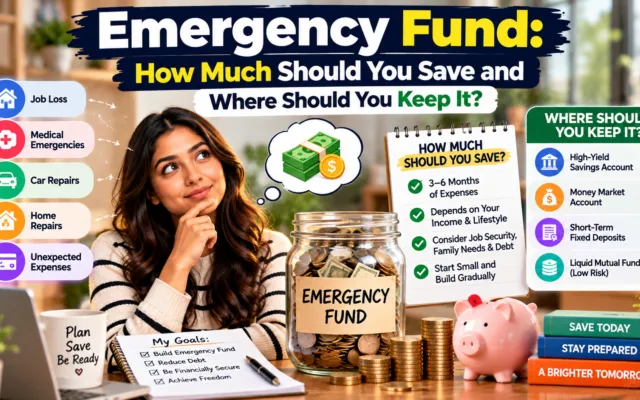
A common starting guideline is to work toward three to six months of essential living expenses. The right amount, though, depends on your circumstances. Add up your rent or mortgage, groceries, utilities, transportation, insurance, minimum debt payments, and other essentials, then multiply your monthly total by the number of months you want to cover.
Turning essentials into a target
If your essential expenses are about 2,000 units of your local currency per month, a three-month target is roughly 6,000, and a six-month target is about 12,000.
| Essential monthly expenses (example) | 2,000 |
|---|---|
| Target: 3 months | 6,000 |
| Target: 6 months | 12,000 |
Why it matters
These figures are illustrative, not a recommendation to save a particular amount in every country. Use your own essential expenses and your own currency.
You may want a larger reserve if you are self-employed, have dependants, work in an unpredictable industry, or rely on a single household income. If saving several months of expenses feels overwhelming, begin with a smaller milestone — covering one unexpected bill — and build from there. For a closer look at how much is enough, see our guide to how much to keep in an emergency fund.
Five Steps to Build Your Emergency Fund
1. Understand your monthly expenses
Review your bank statements and recent bills to separate necessities from optional spending, then calculate what you would need to maintain a basic standard of living if your income temporarily stopped. That number gives you a practical target instead of an arbitrary figure. If you are new to this, our beginner’s guide to personal finance walks through tracking spending.
2. Choose a realistic first goal
Avoid treating the full six-month target as something you must reach immediately. Start with an amount that feels achievable alongside your current bills and debt payments. Consistency matters more than an ambitious promise you cannot keep.
Steady saving adds up
Small, automatic contributions compound faster than most people expect.
| Save 100 a month | 1,200 in a year |
|---|---|
| Save 200 a month | 2,400 in a year |
Why it matters
These amounts are before any interest. The habit matters more than the starting size — you can raise the amount whenever your income allows.
3. Automate your savings
Set up a recurring transfer from your everyday account to a separate savings account shortly after payday. Even a modest automatic contribution builds the habit without requiring willpower. If your income varies, choose a minimum you can usually afford and add more in stronger months. Review the transfer whenever your income, expenses, or priorities change.
4. Choose an accessible savings account
Your emergency money should generally be accessible without taking substantial investment risk. A suitable savings account may pay interest while keeping your funds available for urgent needs. Compare the interest rate, account fees, withdrawal conditions, minimum balance, and deposit protection — a high advertised rate is not automatically best if access is restricted or fees cut into your return.
| Country | Scheme | Typical coverage |
|---|---|---|
| United States | FDIC | Up to $250,000 per depositor, per insured bank, per ownership category |
| Canada | CDIC | Up to CAD $100,000 under its applicable coverage categories at member institutions |
| United Kingdom | FSCS | Eligible deposits with authorised institutions, subject to FSCS rules and limits |
| Australia | APRA — Financial Claims Scheme | Up to AUD $250,000 per account holder per authorised deposit-taking institution |
5. Replenish the fund after using it
An emergency fund is meant to be used when a genuine need arises. If you pay for an urgent repair or cover essentials during a spell of unemployment, that is the fund working as intended, not a failure. Once your situation stabilises, resume contributions and rebuild the balance. Then review what happened and decide whether your target should be larger.
Common Emergency Fund Mistakes
- Waiting until you earn more. Start with an affordable amount instead of postponing saving indefinitely.
- Mixing emergency money with everyday spending. Keep it separate so the balance stays visible and untouched.
- Taking unnecessary investment risks. Money needed at short notice should not depend on volatile markets.
- Ignoring expensive debt. Balance emergency savings with high-interest debt repayment based on your own situation.
- Setting an unrealistic target. Build gradually and review your progress rather than giving up because the finish line feels far away.
Frequently Asked Questions
Frequently asked questions
How much should I keep in an emergency fund?
A common starting point is three to six months of essential expenses. The right amount depends on your job security, dependants, income stability and other resources. Start with a small milestone and build up.
Where should I keep my emergency fund?
Keep it accessible and low risk, such as a separate savings account. Compare interest rates, fees, withdrawal conditions and deposit protection rather than chasing the highest advertised rate alone.
Is an emergency fund the same as regular savings?
No. Regular savings may be for planned goals such as a holiday or a new phone. An emergency fund is reserved for unexpected, necessary expenses like a medical bill or a sudden loss of income.
What should I do after using my emergency fund?
That is what it is for. Once things settle, resume your contributions and rebuild the balance, then review whether your target needs to increase.
Conclusion
Building an emergency fund is one of the most practical steps you can take toward managing financial uncertainty. Start by calculating your essential expenses, pick a target you can genuinely reach, and automate contributions whenever possible.
Whether you live in the United States, Canada, the United Kingdom, or Australia, the underlying principle is the same: prepare for unexpected costs before they arrive. You do not need to build your entire reserve in a single month. A steady, realistic approach will leave you better prepared over time.
Sources
- US Consumer Financial Protection Bureau — An Essential Guide to Building an Emergency Fund Consumer Financial Protection Bureau
- US Federal Deposit Insurance Corporation — Understanding Deposit Insurance FDIC
- Government of Canada — Deposit Insurance Financial Consumer Agency of Canada
- UK Financial Services Compensation Scheme — Savings Protection FSCS
- Australian Prudential Regulation Authority — Financial Claims Scheme APRA
Disclaimer
This article provides general educational information and is not personalised financial, tax, or investment advice. Financial products, deposit protection rules, and individual circumstances vary by country. Verify current rules and your own eligibility before making decisions.
Related articles
Emergency Fund: How Much Should You Save and Where Should You Keep It?
An emergency fund is money set aside for genuine, unexpected expenses. Here is how to work out how much you need, where to keep it and…


Personal Finance for Beginners: How to Get Your Money Under Control
A practical, jargon-free personal finance guide for beginners: track your spending, build an emergency fund, manage debt and understand saving versus investing.

Building an emergency fund in six months
A staged approach to building a cash buffer, and how much is actually enough.