Credit Score 2026: 5 Key FICO Factors That Affect Your Score
Understand the five key FICO score factors in 2026, how they are weighted, and what U.S. consumers can do to protect their credit score.
Medium risk
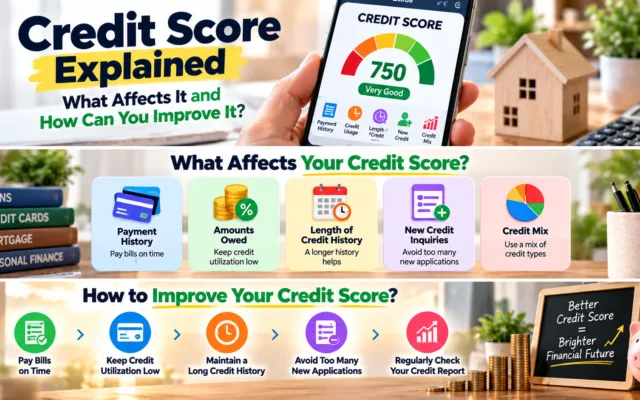
Your FICO score can influence whether you qualify for a credit card, auto loan, mortgage or apartment—and what interest rate you pay. In 2026, the core recipe used by commonly cited FICO models still comes down to five categories: payment history, amounts owed, length of credit history, new credit and credit mix. Understanding how those categories work can help you focus on the habits that matter most. This Credit Score 2026 guide explains each factor and practical steps U.S. consumers can take. It is educational only; no specific score increase is guaranteed.
Key Takeaways
- The five FICO categories are payment history, amounts owed, length of credit history, new credit and credit mix.
- Payment history and amounts owed carry the most weight, so on-time payments and manageable balances deserve priority.
- Credit report errors and FICO-versus-VantageScore differences are not extra FICO categories, but they can change the score you see.
- Review reports from all three nationwide bureaus at AnnualCreditReport.com, the official site authorized by federal law.
Credit Score 2026: The 5 FICO Factors at a Glance
FICO says its scores are calculated from five categories of credit report data. The exact weights can vary by score version and credit profile, but the commonly cited base FICO weights are:
| FICO factor | Typical weight | What it measures |
|---|---|---|
| Payment history | 35% | Whether you have paid accounts on time |
| Amounts owed | 30% | Balances, credit utilization and how much available credit you use |
| Length of credit history | 15% | How long accounts have been open and how recently you used credit |
| New credit | 10% | Recently opened accounts and hard inquiries |
| Credit mix | 10% | Experience with different types of credit |
These percentages are a starting point, not a promise. FICO says the importance of any factor depends on the information in your credit report.
1. Payment History (35%): Why It Carries the Most Weight
Payment history is usually the largest factor. It reflects whether you paid credit accounts on time and how any missed payments were resolved. A 30-day late payment can hurt a score, while a 90-day delinquency, collection account, foreclosure, repossession or bankruptcy can have a larger and longer-lasting effect.
Pay at least the minimum by the due date on every account. Set up automatic payments, then pay more when your budget allows. If you expect to miss a payment, contact the lender before the due date; some offer hardship options. Late payments can remain on a report for seven years, although their score impact usually fades.
2. Amounts Owed (30%): Credit Utilization and Balances
Amounts owed includes total debt, revolving balances, the number of accounts with balances and your credit utilization ratio. Utilization compares balances with limits. If you have a $5,000 limit and a $1,500 balance, your utilization is 30%.
FICO does not publish a single “safe” utilization threshold. Lower utilization is generally better, but the effect depends on your overall profile. Paying down balances before the statement closing date can lower the balance that gets reported. You do not need to carry a balance to build credit; paying in full by the due date avoids interest and still shows responsible use.
Watch per-card utilization, not just your total. Maxing out one card can look riskier than spreading a smaller balance across accounts. If you are paying down debt, see our guide to credit card debt in 2026.
3. Length of Credit History (15%): Age and Activity
Length of credit history considers how long accounts have been open, the age of your oldest account and the average age of all accounts. It can also reflect how recently you used credit. A longer, active history can help, but it is not a reason to pay interest or open accounts you do not need.
If you have an older no-fee card, keeping it open with a small recurring charge and automatic payment can preserve account age and available credit. Closing a card does not erase its history immediately, but it can reduce total available credit and raise utilization.
4. New Credit (10%): Applications and Inquiries
New credit looks at recently opened accounts and hard inquiries. A hard inquiry happens when a lender checks your credit for an application and may have a small, temporary effect. Mortgage, auto and student loan rate shopping can be treated differently when multiple inquiries occur within a focused window, so compare offers within a short period.
Prequalification checks are often soft inquiries, which do not affect your score the way hard inquiries do. Still, avoid applying for several cards or loans just to collect bonuses. Each new account can lower your average account age and add to your balances. For more, see how lenders decide loan eligibility.
5. Credit Mix (10%): Types of Accounts
Credit mix reflects your experience with different types of credit, such as revolving accounts like credit cards and installment accounts like auto loans or mortgages. A mix can help some profiles, but it is a smaller factor and not a reason to take on unnecessary debt.
If you already have a card and a loan in good standing, you likely have enough variety. Do not open an installment loan solely to improve your mix. On-time payments, low balances and a stable history matter more.
What the Five FICO Factors Do Not Include
Two issues often get confused with FICO factors: credit report errors and scoring-model differences. They are not extra FICO categories, but they can still affect the score you see.
- Credit report errors and identity theft. A mistake, such as an account that is not yours or an incorrect late payment, can distort your score. Dispute genuinely inaccurate information with the credit bureau and the furnisher.
- FICO versus VantageScore. Lenders use different models. A score from a bank or credit app may be FICO, VantageScore or another model, and even two FICO versions can produce different numbers.
- Income and employment. Base FICO scores are built from credit report data, not salary. A lender may ask about income during underwriting, but that is separate from the score.
How to Check and Improve Your Credit Score in 2026
Start with your credit reports, not just your score. Request reports from Equifax, Experian and TransUnion at AnnualCreditReport.com. Review each one for accounts you do not recognize, incorrect balances, duplicate collections and late payments that should not be there.
Dispute errors with the credit bureau and, when appropriate, the furnisher. Include supporting documents and keep records. A bureau must investigate, but it does not have to remove accurate negative information. Be wary of companies that promise to erase accurate late payments or guarantee a score increase.
For day-to-day improvement, pay every account on time, lower revolving balances, avoid unnecessary applications and keep older accounts in good standing. Scores may not change overnight because lenders report on different schedules. For a refresher, read Credit Score Explained and what moves your credit score.
A Practical 30-Day Action Plan
- Week 1: Pull all three reports, list every account, balance and limit, and set automatic minimum payments.
- Week 2: Pay down the card with the highest utilization first. Avoid maxing out any one card.
- Week 3: Dispute clear errors and organize supporting documents. Pause new credit applications unless you need financing.
- Week 4: Set a monthly review reminder, check reported balances and plan next month’s payments. For budgeting help, see our single-adult budget guide or start with personal finance for beginners.
Frequently Asked Questions
What are the five FICO score factors?
Payment history, amounts owed, length of credit history, new credit and credit mix. FICO says the weight of each depends on the score version and the person’s profile.
Which FICO factor matters most?
Payment history is typically the largest, followed by amounts owed. On-time payments and manageable revolving balances are the first habits to protect.
What credit utilization should I aim for?
There is no official FICO cutoff. Lower utilization is generally better, but 30% is a common guideline rather than a rule.
Does checking my own credit score hurt it?
No. Checking your own score is normally a soft inquiry and does not affect your score the way a lender’s hard inquiry can.
Can I remove accurate late payments?
No. Accurate negative information generally stays on your report for seven years. A dispute is not a way to erase a legitimate late payment.
The Bottom Line
The five FICO factors give you a practical roadmap: pay on time, keep balances manageable, protect account age, apply for new credit deliberately and avoid debt just to improve your mix. Review your reports and treat the score you see as a guide, not a guarantee. Consistent habits matter more than any shortcut.
Sources
Related articles

Credit Score Explained: What Affects It and How Can You Improve It?
Learn what a credit score is, which habits and factors can affect it, and practical steps to build and maintain a healthier credit profile.

Understanding what moves your credit score
The five factors that influence a credit score, and which ones you can actually control.

How lenders decide your loan eligibility
See how US lenders assess income, debt-to-income ratio, credit history and collateral, with a worked example and practical steps to improve your application.