Binance Heist 2026: How a $6.3 Billion Security Breach Shook Crypto Markets
Binance reported an estimated $6.3 billion security breach on October 30, 2026. About $3 billion was frozen, withdrawals were suspended, and the exchange pledged to cover losses. Here is what happened and what crypto investors should learn.
High risk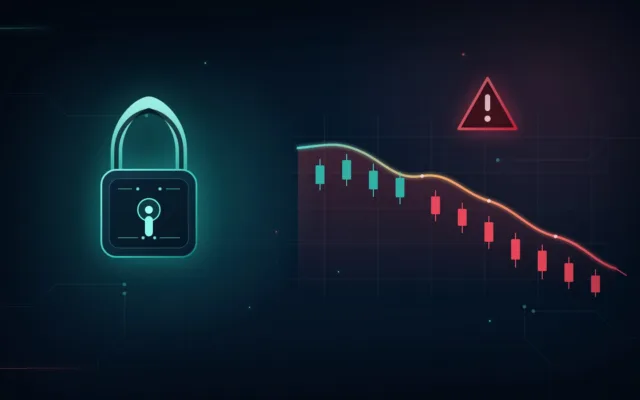
Cryptocurrency investors received a serious reminder about exchange security when Binance disclosed a major incident involving approximately $6.3 billion in cryptocurrency assets. The world’s largest cryptocurrency exchange by trading volume reported unauthorized withdrawals from compromised hot wallets, triggering emergency security measures and renewed concerns about the safety of digital assets.
The incident, disclosed on October 30, 2026, has drawn attention to a basic question: what happens when a platform responsible for handling enormous amounts of cryptocurrency suffers a security failure?
Binance says it will cover the losses, while investigators and blockchain partners continue working to trace and freeze affected assets. The episode also highlights why investors should understand the risks of holding cryptocurrency through a centralized exchange.
What Happened in the Binance Security Breach?
In its October 30 update, Binance confirmed that its hot wallets had been compromised, resulting in unauthorized withdrawals worth approximately $6.3 billion. The company initially suspected that an employee’s compromised laptop had played a role, but its subsequent investigation identified additional points of breach.
The complete technical sequence had not yet been established in the latest update available for this article. Binance also said it had found no evidence that wallet private keys had been leaked. That distinction matters: the absence of evidence of a private-key leak does not mean the wider security incident was harmless.
Hot wallets are cryptocurrency wallets connected to systems that can process transactions online. They make deposits, withdrawals, and routine transfers more convenient, but their connection to operational infrastructure also creates security risks if authorization systems or related services are compromised.
Later reporting by CoinDesk and the BBC described an account-delegation exploit involving Ethereum’s EIP-7702 feature and a self-destruct mechanism designed to erase traces. Binance said the investigation had uncovered additional breach points but had not yet determined the full sequence. Blockchain-analysis firms TRM Labs and Chainalysis said the pattern resembled attacks by North Korea-linked TraderTraitor, though Binance had not attributed the incident, according to the Associated Press.
Binance was working with law enforcement, including the FBI and the US Secret Service, according to Reuters.
How Much Money Was Affected?
Binance estimated the impact at approximately $6.3 billion. The exchange reported that around $3 billion in affected assets had been frozen on-chain through cooperation with blockchain partners and asset issuers.
Here is a simplified breakdown using those reported figures:
| Item | Approximate amount |
|---|---|
| Estimated total impact | $6.3 billion |
| Affected assets frozen on-chain | $3.0 billion |
| Difference not yet reported as frozen | $3.3 billion |
| Frozen share of estimated impact | 47.6% |
Calculation: $3.0 billion ÷ $6.3 billion × 100 ≈ 47.6%. In other words, the amount reported as frozen represented just under half of the estimated impact at that point.
Important: The remaining $3.3 billion is a mathematical difference, not confirmation that every dollar is permanently lost or impossible to recover. Freezing an asset also does not automatically mean it has been returned to its owner. Recovery depends on further investigation, control over the relevant assets, and the steps taken by exchanges and issuers.
Will Binance Customers Lose Their Money?
Binance stated that it would absorb the financial impact rather than pass the stolen-fund losses on to users. In its October 30 update, the company said it had set aside more than $6.34 billion in company resources, including $5 billion held in the affected token assets, and was working to acquire the remaining assets, according to CoinDesk.
The exchange said its Secure Asset Fund for Users (SAFU) and corporate treasury would be used to cover the losses. SAFU is an emergency reserve created in 2018 to protect customers in extreme situations, including security breaches.
These are important commitments, but readers should distinguish a company’s stated recovery plan from an independently verified final outcome. The incident investigation, withdrawal restoration, and updated proof-of-reserves process all matter when assessing the response.
Binance said deposits remained unaffected and that it was targeting a resumption of withdrawals within about 40 hours, with a proof-of-reserves snapshot expected by Monday. Those timelines could change as testing continues.
Users should follow official Binance announcements for service updates and avoid links or messages claiming to offer special refunds. Scammers often exploit high-profile incidents by impersonating support staff or asking customers to disclose passwords, authentication codes, or wallet recovery phrases.
How Did the Incident Affect Cryptocurrency Markets?
News of a large exchange security incident can influence market sentiment even when the reported loss is not a direct loss for every customer.
Reuters reported that cryptocurrency prices fell after the breach became public. Bitcoin hit a six-week low of $76,368, ether fell more than 3% to a two-month low of $2,178, and Binance’s BNB token fell about 6.4% to $696 before markets stabilized. Reporting also described declines in shares of several publicly traded companies with crypto-market exposure, including Coinbase, Strategy and Robinhood.
There are several reasons markets may react:
Confidence: Investors may question whether an exchange can reliably protect assets and process withdrawals.
Liquidity concerns: Temporary withdrawal restrictions can make users anxious about accessing their holdings, even if other services continue operating.
Selling pressure: Some investors may reduce exposure to cryptocurrency when uncertainty increases.
Contagion fears: Market participants may worry about whether other platforms, token issuers, or service providers have related vulnerabilities.
These factors can affect prices, but they do not establish that every cryptocurrency will decline by the same amount. Market movements also depend on wider economic conditions, leverage, liquidity, and investor positioning.
What Can a Crypto Investor Learn From This Incident?
The breach offers several practical lessons for people who own digital assets.
First, understand where your cryptocurrency is held. Keeping assets on an exchange can be convenient for active trading, but it means relying on that platform’s custody systems, operational controls, and withdrawal processes.
Second, protect your own account. Use strong, unique passwords, enable multi-factor authentication, and beware of fake customer-support messages. Never share your recovery phrase or authentication codes with someone claiming to help recover funds.
Third, consider concentration risk. Holding all your investments through one platform may expose you to a single point of operational failure. Different storage arrangements have their own risks, so learn how custody, recovery, and transaction approvals work before making changes. Before taking on volatile investments, it also helps to have a liquid safety net; our guide to how much to keep in an emergency fund explains the basics.
Finally, do not make hurried trading decisions based only on breaking news. Check official statements, confirm what has actually happened, and consider whether any decision fits your financial circumstances and risk tolerance. Readers comparing cryptocurrency with diversified investments can review our beginner’s guide to index funds and individual stocks.
Conclusion
The Binance security breach has put exchange security and investor confidence back in the spotlight. The reported $6.3 billion impact is enormous, while the roughly $3 billion in affected assets frozen on-chain shows how blockchain monitoring and cooperation among industry participants can help limit further movement of stolen funds.
The next important developments are the investigation’s technical findings, the restoration of withdrawals, asset recovery, and updated proof-of-reserves information.
For cryptocurrency investors, the central lesson is straightforward: potential returns are only one part of the decision. Understanding custody, platform risk, and how you would respond to a disruption is equally important.
Financial Disclaimer
This article is for educational and informational purposes only. It is not investment, legal, or financial advice. Cryptocurrency assets are volatile and can result in substantial losses. Verify current information through official sources before making financial decisions.
Sources
- Security Incident Update, October 30, 2026 Binance, October 30, 2026
- Hackers steal $6.3 billion from Binance in world's biggest crypto heist Reuters via USA Today, October 30, 2026
- Gone in 20 minutes: How the biggest heist in crypto history unfolded Reuters via Investing.com, October 30, 2026
- What to know about the $6.3B Binance hack Associated Press, October 30, 2026
- Binance hack: $6.3 billion impacted in record crypto theft CNBC, October 30, 2026
- Crypto giant Binance attempting to recover $6.3bn stolen in hack BBC News, October 30, 2026
- Binance discovers multiple breach points in $6.3 billion attack CoinDesk, October 30, 2026
Related articles
Federal Reserve Policy: Rates on Hold, but Caution Remains for Bonds and Inflation
The Federal Reserve held its target range at 3.75%-4.00% on October 28, 2026, with two officials preferring a hike. Inflation remains elevated, Treasury yields are above…


Jio IPO 2026: Listing Performance, Key Numbers, Risks and What Investors Should Know
Explore the Jio IPO 2026, including its issue price, listing performance, investor demand, business growth opportunities and key investment risks.

Student Loans in 2026: FAFSA, Interest Rates, Debt and Smart Borrowing Tips
Learn how student loans work in 2026, how to apply for FAFSA, current federal loan rates, borrowing costs and practical repayment strategies.