Why Oil Prices Matter More Than You Think
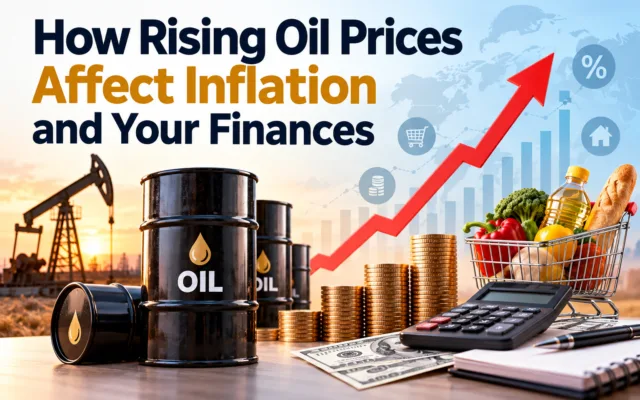
When crude oil prices rise, the impact extends far beyond petrol stations. Transport becomes more expensive, businesses face higher operating costs, and households may find that their money simply does not stretch as far as it once did.
Oil is a fundamental input for the global economy. It fuels vehicles, powers industries, and is used in the production of countless everyday goods. Because of this, even a sustained rise in oil prices can ripple across inflation, interest rates, business profits, and investment markets.
Understanding how oil prices affect everyday finances can help individuals and businesses prepare for changing economic conditions.
Why Do Crude Oil Prices Rise?
1) Supply Disruptions
Oil production and transportation are concentrated in specific regions. Conflict, sanctions, shipping disruptions, or damage to energy infrastructure can restrict the amount of oil reaching global markets.
The Strait of Hormuz is particularly important, as it connects the Persian Gulf with major shipping routes. Even the possibility of disruption can raise concerns and push prices higher.
2) Changes in Global Demand
Oil demand rises when economic activity expands. More manufacturing, travel, freight, and construction all require more energy. Conversely, a slowdown in major economies can reduce demand and put downward pressure on prices.
Supply restrictions can push prices higher even when economic growth is weak.
3) Production Decisions and Inventories
Oil-producing nations often coordinate output through groups like OPEC+. Changes in production targets can shift the balance between supply and demand. Falling commercial inventories also tend to signal tighter supply, driving prices up.
How Do Higher Oil Prices Affect Inflation?
1) Petrol and Diesel Become More Expensive
The most visible effect is at the fuel pump. Higher crude prices usually translate to higher petrol and diesel costs. The exact pass-through depends on taxes, exchange rates, refining margins, and government policies.
2) Transportation Costs Increase
Businesses rely heavily on road, rail, sea, and air transport. Rising fuel costs make moving raw materials and finished goods more expensive. Many companies pass these costs to consumers, leading to cost-push inflation.
3) Food and Household Expenses Rise
Energy affects farming, fertiliser production, food processing, refrigeration, packaging, and distribution. Higher diesel prices raise farm and logistics costs, which often show up as higher grocery bills.
What Happens to Interest Rates When Oil Prices Rise?
Central banks monitor inflation closely when setting interest rates. If higher energy costs push inflation up and it looks likely to persist, policymakers may delay rate cuts or tighten monetary policy.
Higher interest rates make borrowing costlier – affecting home loan EMIs, car loans, personal loans, and business credit. However, central banks weigh this against growth and employment before deciding.
Often, households face a difficult combination: rising living costs alongside more expensive borrowing.
How Can Rising Oil Prices Affect Investments?
| Investment Area |
Impact |
Notes |
| Energy/Oil & Gas Stocks |
Positive |
Can benefit from higher prices, but margins depend on costs and regulations. |
| Airlines & Transport |
Negative |
Fuel is a major cost; profits come under pressure. |
| FMCG & Consumer Staples/Discretionary |
Mixed to Negative |
Rising costs and tighter budgets can hurt demand. |
| Bonds |
Mixed/Negative |
Inflation fears can push yields higher, hurting bond prices. |
| Emerging Market Currencies |
Varies |
Oil importers often see currency pressure; exporters may see support. |
Practical Ways to Prepare for Higher Energy Costs
- Review your budget: Track fuel, groceries, utilities and cut non-essential spending where possible.
- Cut fuel use: Combine errands, carpool, use public transport, maintain tyre pressure, or drive efficiently.
- Build an emergency fund: Keep 3–6 months of essential expenses in a safe, liquid account.
- Be cautious with debt: Avoid taking on high-cost debt if rates are expected to stay higher.
- Shop smarter: Buy groceries in bulk wisely, reduce food waste, and compare utility plans.
- Stay invested wisely: Diversify and avoid panic-selling during short-term market moves.
Key Takeaways
- Broad impact: Oil affects fuel, food, transport, inflation, and interest rates.
- Cost-push inflation: Higher oil prices often drive prices up across supply chains.
- Rates can stay high: Persistent inflation may keep borrowing costs elevated.
- Unequal effects: Oil importers feel more pressure than oil exporters.
- Preparation matters: Budgeting and savings are your best defence.
Frequently Asked Questions (FAQs)
1) Why do oil prices affect so many things?
Oil is a key energy source and input. Higher oil costs raise transport and production expenses, which spread to most goods and services.
2) Do rising oil prices always lead to higher interest rates?
No. Central banks look at overall inflation, not just oil. If oil-driven inflation is temporary, they may hold rates steady.
3) Which countries are hit hardest by rising oil prices?
Countries that import most of their oil (net importers) are usually hit hardest, as their import bills rise and currencies can come under pressure.
4) How can households save on rising fuel costs?
Use public transport, carpool, combine trips, maintain vehicles well, drive efficiently, or consider electric/hybrid options if feasible.
5) Is inflation always bad when oil prices rise?
Moderate inflation is normal, but high, persistent inflation erodes purchasing power – making it harder for households to afford essentials.
Sources
- International Energy Agency (IEA) – Oil Market Report
- U.S. Energy Information Administration (EIA) – Petroleum
- OPEC – Monthly Oil Market Report
- Reuters – Commodities & Energy
- Reserve Bank of India / U.S. Federal Reserve